Exposure: Available Light
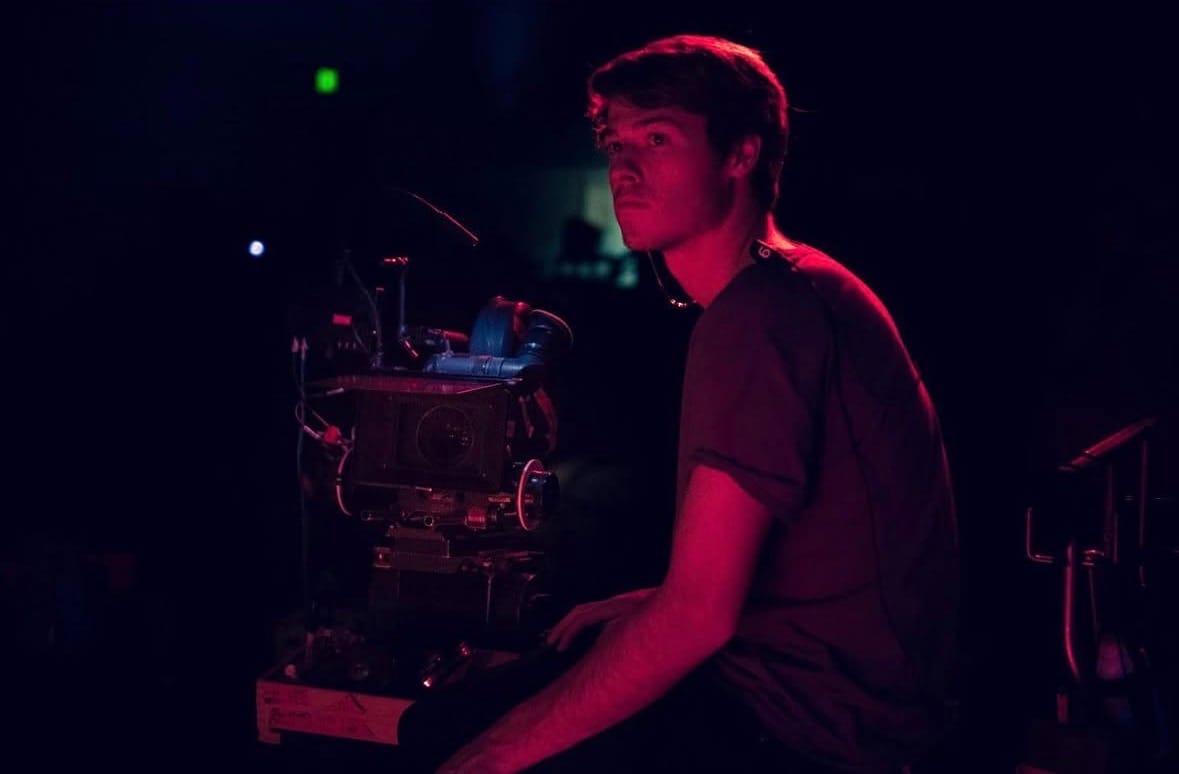
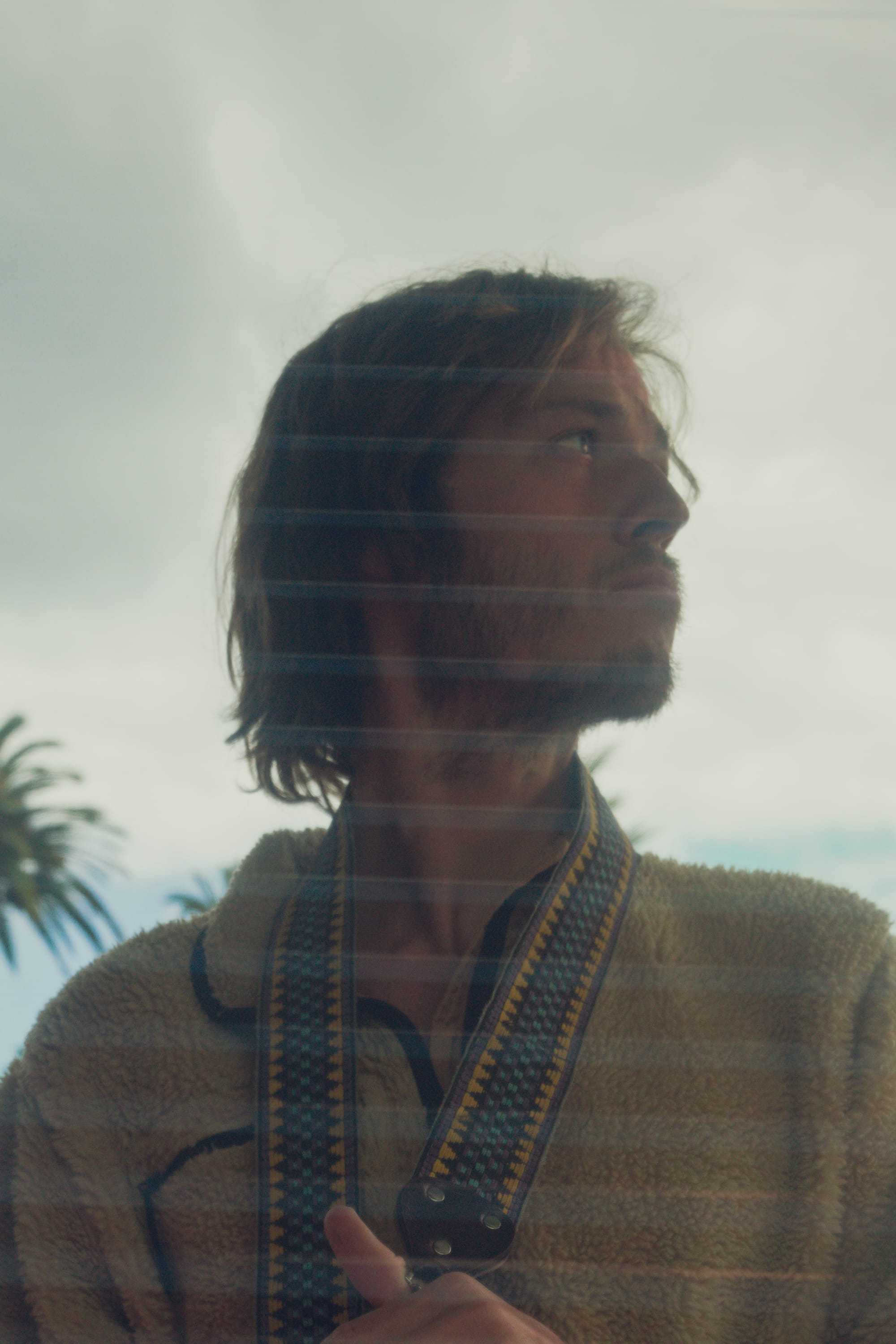
I was walking past a reflection and saw myself. I slowed down to observe. The way you do before you notice and look away. But this time, instead of turning away, I lifted my camera.
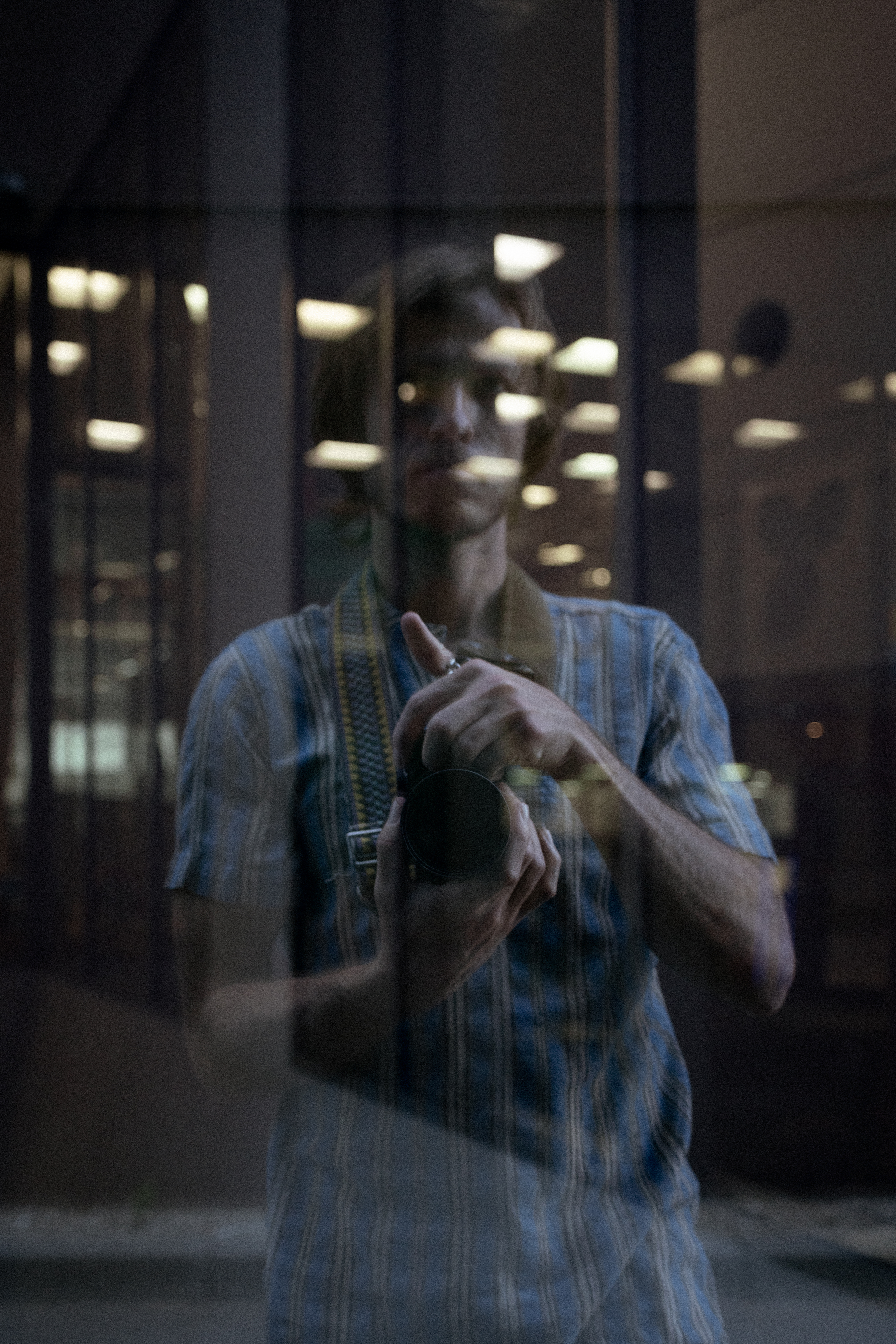
I was walking past a reflection and saw myself. I slowed down to observe.
The way you do before you notice and look away. But this time, instead of turning away, I lifted my camera.
In the frame now. Trying to see myself as clearly as I've tried to see everything else. This writing is where I've been sitting.
I got my first real camera off Craigslist the summer I was retaking biology. I failed Biology two more times in college. I figured the camera out well before biology.
In middle school and high school, BMX was my life. My time outside was spent on my bike with my brothers and friends who rode. We were at the skate park nearly every day, all having ridden there from different parts of town. Rarely did we text or call, we just knew where to meet up. There were no parents in sight. Some kids drank or did drugs. We filmed each other learning new tricks, flipping off the camera, trying to spit loogies, and having fashion shows in Target — full looks, runway walks, complete with paparazzi. One afternoon we rode down to the high school, built a ramp out of school spirit signs and trash cans, and jumped the grass knoll in the center of the quad. We then hung the signs back up, hoping nobody would notice the tire marks. Everyone did, and the suspects were obvious.
Senior year I switched out of cooking into a second film class. My teacher had a gig come up — one of his friends needed a birthday video edited for her husband. He wasn't interested but passed it to me. When he did, he told me not to undersell myself.
I was in his classroom when the call came in, my teacher sat across the desk from me. He told me to go in knowing the value I was giving her. I quoted $200, which at the time felt like a lot. But my teacher had given me a thumbs up, so I said the number with every ounce of fake confidence I had.
She accepted immediately.
A grade is someone evaluating your work. An immediate yes is validation you’re providing something valuable. I began applying to colleges for a film degree.
I helped film an agriculture event, then edited a hype video overnight to play for the audience at the end. We were in the bleacher seating when it played. The room filled with excitement — people seeing their own faces and the faces of people they knew. I couldn't stop smiling through the whole thing. No one in that room knew that I was one of the people who made it.
That moment was purely for me.
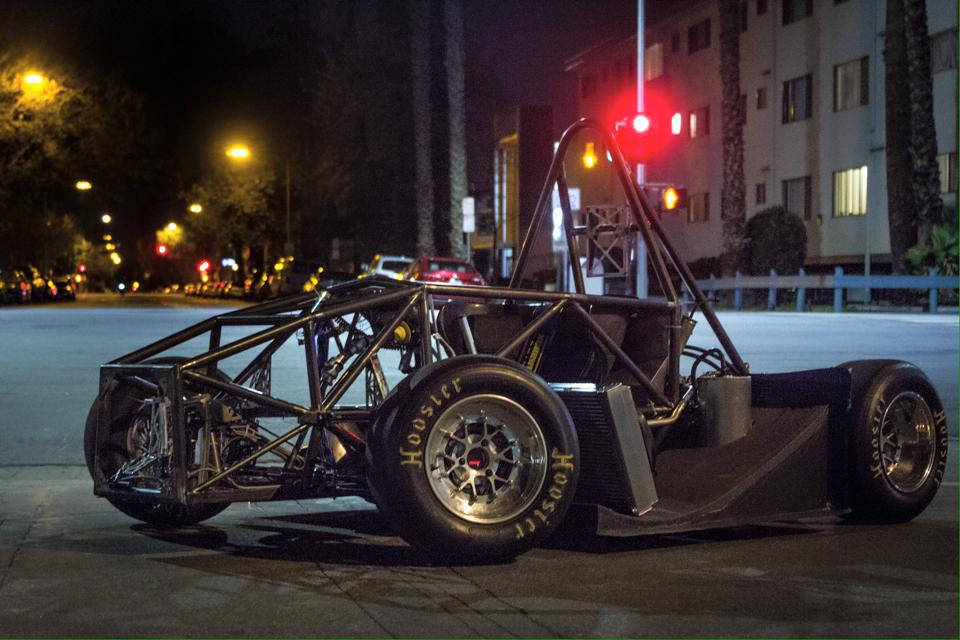
I was walking through Washington Square during club recruiting when a racecar caught my eye.
The club designed, manufactured, and raced a new car every year in a collegiate competition called Formula SAE. Most of the members were engineers, but they were open to anyone. I asked if they needed someone for photography and video marketing. They said the person who'd been doing it had just graduated.
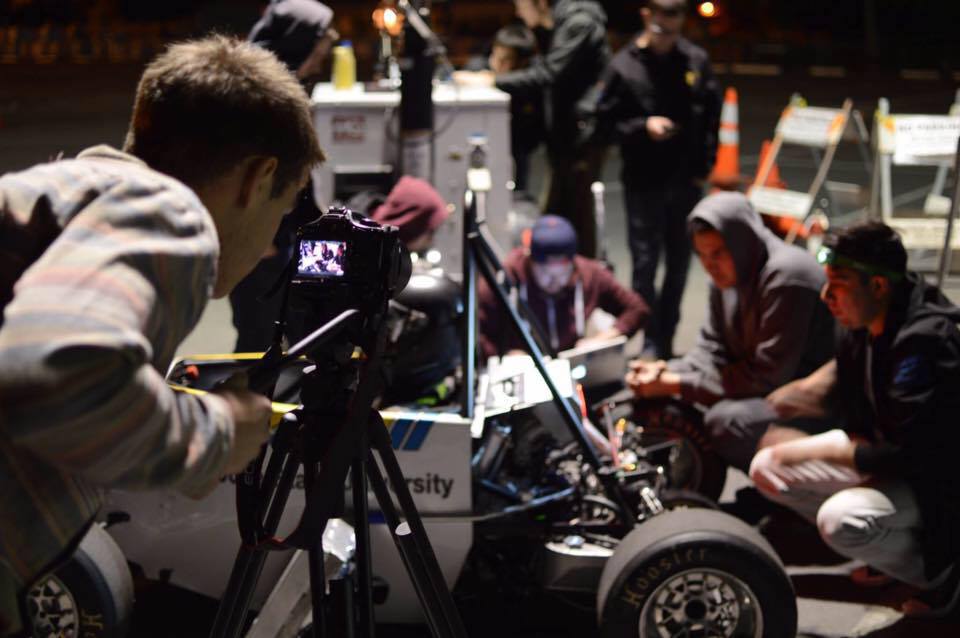
Months later I was in the middle of their first manufacturing cycle, showing up nearly every day to film. At first I waited to be invited, only going once a week or every other. Then the team manager told me plainly: dude, we're here all the time. If you want to film, just show up.
A week later I had a free afternoon. I walked down to the machine shop. The big double doors had a sign — qualified persons only. The team had propped them open with a metal block. Close enough.
The smell hit first — industrial cutting fluids, metal shavings, burnt oil. Somewhere between a dentist's office and an auto shop. I acknowledged a few people with eye contact and a nod, set my camera up on a tripod, and found the first shot. The obvious place to start was where the steel tubes were set up on a jig, the chief engineer welding together the frame.
Things settled slowly and conversation eventually came. But what worked was that nobody had to force it. We each had a task. We could approach each other at our own pace.
Over time I started doing my schoolwork in the club room instead of my dorm. I went to parties. Presentations on ridiculous topics — one of the members ranked girls not on the usual scale but in binary. Ones and zeros. They were engineers about everything, including the things engineers have no business being engineers about.
One night in late spring we pushed the car out to the alleyway around the corner of the shop. The air was crisp. I took photos of it illuminated by the green and red light from the streetlight behind it. The ten or so students who had stayed up late for the final touches gathered around. With a loud rumble the 600cc engine came to life and everyone cheered.
Myself included.
When the season ended the team manager asked me to take over the position. He didn't see anyone else he was confident in — though secretly I think no one else wanted it. I'd been there through every step. I knew the flow of things, the time it would take, the people involved.
I was hesitant. Taking it meant stepping out from behind the camera — no longer the person whose contribution was to show up and document. Now I'd be the one responsible for the room itself.
A family friend heard I was pursuing film and asked why I didn't just go work for my parents' company instead. There's good money in that, he said. I told him if you do what you love you'll never have to work a day in your life. He didn't seem too convinced.
My parents encouraged me to take the position. And if I'm honest, the logic sounded reasonable. Management experience, a network of engineers with solid career trajectories, and something to stand on. Film was the dream worth keeping, but maybe it helped to have a floor underneath it first. I believed that, or I wanted to. Either way, I said yes.
The year had ambitious goals. I brought in students from the university PR department. Improved our marketing materials, developed social media campaigns. I ended up doing most of it myself — I couldn't find engineers willing to take on communications work, and I don't blame them — but if I wasn't doing it, it just wouldn't get done.
The other change was a pre-season fundraising dinner. Something we hadn't done before. I pulled it together and worked with PR on talking points and a script.
When I got up there, I froze.
In class presentations and other public speaking I'd always done fine. I was the type of student who happily took on the speaking role in a group project, who volunteered for student council events. But this was different. Every situation that had worked: I'd shown up with something to give. Just there to contribute whatever I could. Now I was at a podium asking people to give me something. There was no task to orient around. No contribution to make. Just me and a microphone.
My face went red. When the moment came I rushed through the ask. I tried to outrun my nerves, and what came out was something to the effect of: this is a new event, one which in the past we were able to go without, so your donations aren't required. I knew before I'd finished the sentence. My PR contact pulled me aside afterward. That's what they called a nightmare, she said. I told her I knew. Family and team members were gracious about it. We're all learning, someone said.
They weren't wrong.
My last competition was in Lincoln, Nebraska. I turned 21 at that event. That morning, a few team members showed up at my hotel room with a shooter, they told me happy birthday, and said they had more where that came from. Engineers really are thorough about everything.
Later that evening a few of us were across the street at McDonald's. I'd gone over just to check in with some of the team. Then I heard my full name called over the intercom saying my order was ready. I hadn't placed one. When I walked up, the employee pulled a Smirnoff Ice out from behind the counter on a tray.
It doesn’t matter where you are, there is only one correct response to being Iced. I took a knee and chugged it right there in the middle of that McDonald's in Lincoln, Nebraska. The employee had been briefed. Multiple people were in on it. Someone had called ahead.
These were my people.
When my time as manager ended I went back to film — which is what I'd come to college for in the first place. The following year the engineering team’s unveiling event came around. I was invited and wanted to go, but there was a film shoot the same day and I chose that instead.
My phone lit up during the shoot. A handful of them asked where I was and if I was going to make it. I didn't have a good answer. I was exactly where I'd decided to be, doing exactly what I'd come to college for — and it still felt like a betrayal. They propped the door open. I walked back out when I had what I needed.
I didn’t reply until the next day.
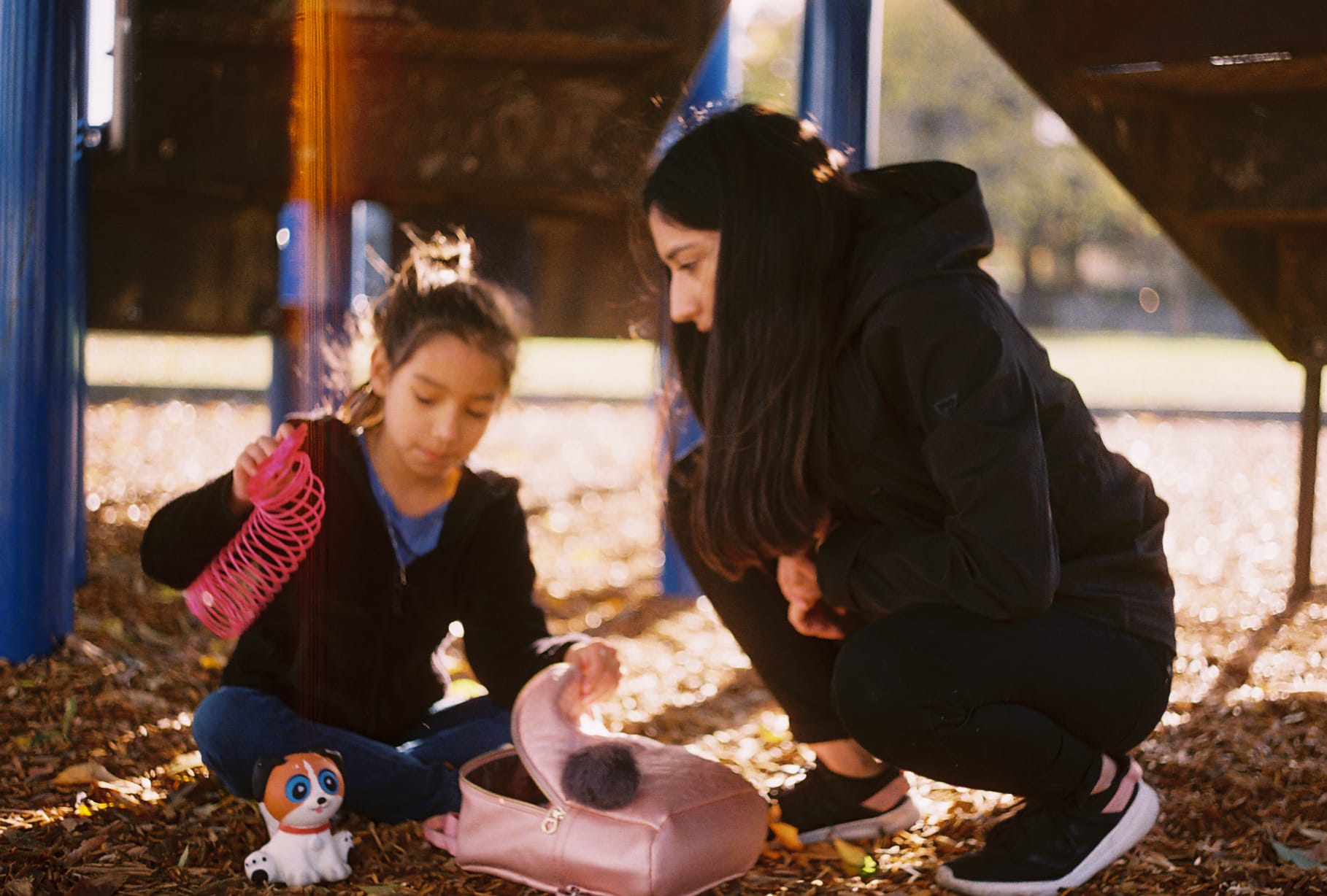
We made a short film about a little girl whose only birthday wish was to spend time with her mother — a story written and inspired by something real we were watching unfold in front of us. She was twelve. What started as fun for her quickly became work. She ran out of interest, the way twelve year olds do, somewhere between the second setup and the third take of each scene.
We bribed her with Starbucks. We made every shot feel as much like play as we could. The crew knew we were losing her but didn't know how close it came to never happening at all. The moment that made it worth it was the one where she forgot we were there — playing with her toys, lost in her own imagination, the camera and everyone behind it was invisible. We'd spent weeks earning that one moment. At that semester’s student film festival — one we organized ourselves, theatre kids hosting, as close to the Oscars as we could make it — she won best actress. She was smiling ear to ear.
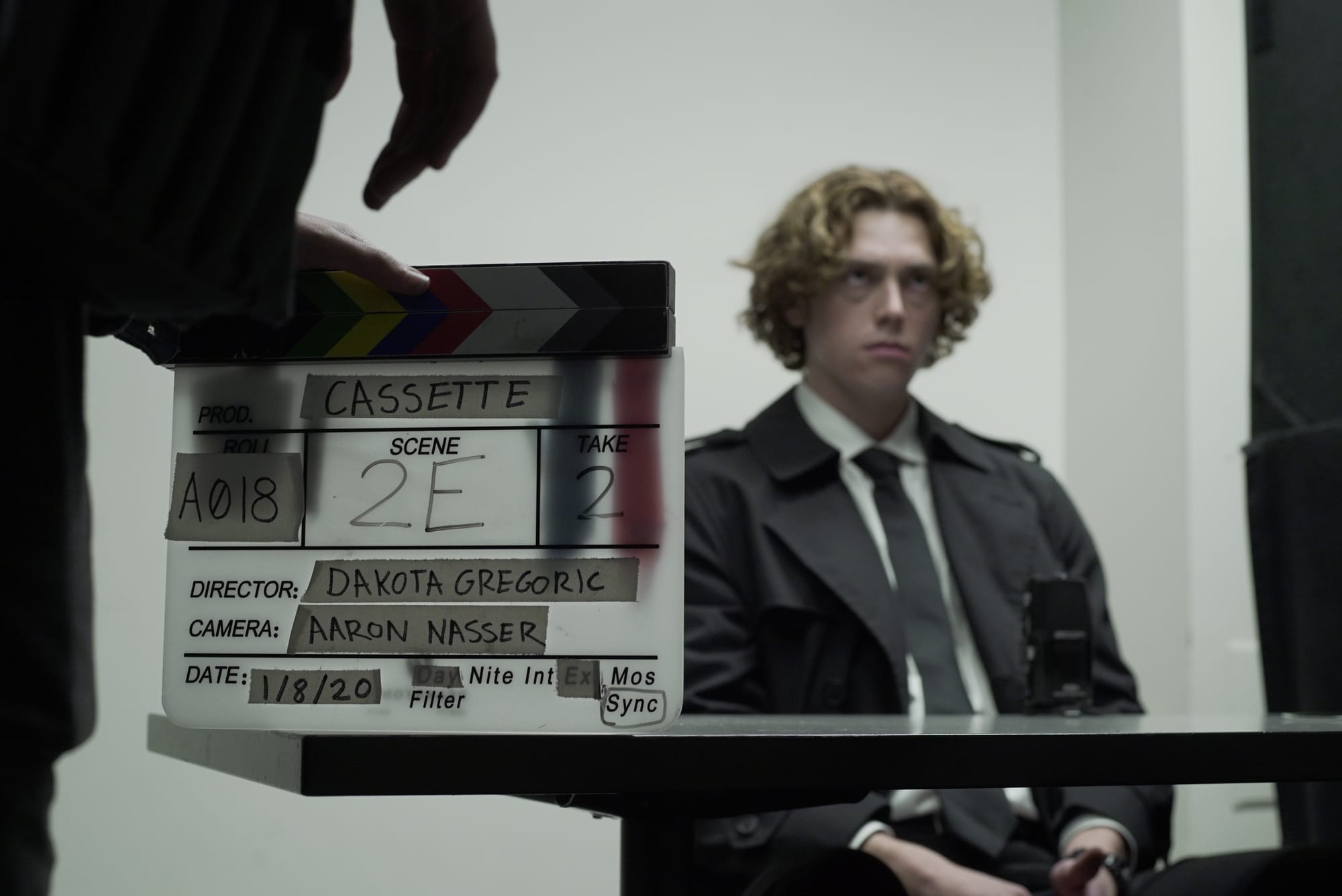
That semester five of the films I worked on played in the festival. I won best cinematography, which felt deserved, although the field was limited by the fact that I'd also shot most of the competition.
We went out after. The people I'd spent months with on set, the ones who knew what it had taken to get those films made. The kind of friendships you only build in the hours after midnight when you're too tired to perform and too wired to go home. Although I wasn't drinking, I still stayed to close out the bar.
I drove to the NBC Bay Area parking lot instead of home. My shift started at 3:30am. I'd been working there for two years. I started as an intern, moved to PA, then floor director. I was trying to angle my way behind the camera, but they moved me further into production. I'd spent months slowly earning the trust of the reporters and photographers, going on ride-alongs, waiting until I could ask them what I needed to do to get their job. The answer I got, was that I simply needed to wait for one of them to die. It wasn't said meanly. They recognized something, but it still felt like a door closing. I knew I'd have to make a decision before too long.
I came through the security gate around 11pm. Crawled into the back of my GTI, feet up on the center console — a setup I'd worked out across many nights between shoots, classes, and shifts. This was my first time in this particular parking lot. Halfway through the night a security guard knocked on my window to check I was okay. She told me not to worry and let me go back to sleep.
I started my shift. When it ended, I went back out to my car and the battery was dead. The same guard — a badass Eastern European woman — came back with a battery and jumped me to life.
After work, then class, I drove home with the windows down, singing as loudly as I could to stay awake. Occasionally hitting the rumble strips on the side of the road. I'd worked out techniques for this by now. It wasn't the first time and I knew it wouldn't be the last.
The next day I was a camera assistant on a twelve hour shoot up in Oakland.
After graduation I kept showing up. There was no position to fill, no credit to earn, but the students still in the program were working on their films and I'd come to shoot BTS, answer questions if anyone had them, and just be useful in whatever way the day required.
Both of these semester productions, I ended up as a dead body. They needed one and I was keen. I committed fully to the performance. The bar for a convincing corpse turned out to be lower than I'd anticipated.
What I was actually there for was the moments between the takes. Everyone's attention was on the work. Which meant I could watch all of them.
You can’t manufacture a presence that soothes. You can only learn to stay in the frame, still and observant, until you and the camera become part of the room.
I knew how to do that.
Then COVID came, and with it the hardest period of my life. Her family was suddenly in crisis. I couldn't be inside. I was there for what I could be there for, but not the rest.
After two days I went to a film shoot. The producer knew the situation and told me he could find a replacement. I told him I was fine. Working felt more useful than sitting on a curb — I could earn something, donate it to the family, do something measurable with the helplessness.
That period contained more loss than I knew how to hold. By the time I came up for air, I had stopped picking up the camera.
She loved being photographed. I always had the camera when we were together. When we broke up, I put the camera down. The relief felt like clarity. Like finally being reasonable. Like growing up.
When the world collapsed I reached for comfort and stability. I found them, or something that looked like them. It felt like being hungover — the stillness was real, and so was the cost of what preceded it. What I didn't do was sit in the discomfort long enough to reconnect with what I actually wanted. I skipped straight from chaos to shelter without stopping to feel the space between. Two of us inside together trying to build a new life, one I wasn’t even sure I wanted.
The house had more rooms than I needed. One became an office. One belonged to the cats. I tried to grow an organic garden out back.
Most evenings she'd nap. I'd find something to do. When she woke up, I'd come back to the bedroom. We'd put on 1,000 pound sisters. Her dog laid between us. We mostly avoided the conversations. I'd go to bed and she'd stay up.
The camera was in the closet. I didn't notice I wasn't reaching for it.
I told myself I'd only pick it up when it meant something. It was true, but also the most useful excuse I had.
The photos you take are a consequence of your attention. If your life becomes narrow, so too will your photos. I think that's partly why I left the camera where it was during that time. I wasn't ready to see what it would show me.
A friend from film school moved back to Italy. He invited me to his wedding. I didn't go.
I traded the work I loved for a stable career. Simple work. Simple people. Easy to turn off at the end of a shift. I'm not ungrateful for what it gave me — it helped me rebuild, gave me ground to stand on. But easy to turn off is different than not caring if it's on.
What I lost wasn't a career, it wasn't even the camera. It was looking. The habit of pointing at the world and asking what's worth seeing. Presence without examination isn't the same thing — examination without action is just a longer way of staying still.
With photography you never know where the next great shot will come from. But if you aren't out in the world with a camera in your hand, you definitely won't capture it. I hadn't been out in the world.
December 2023 I left that relationship. Last spring I set out on a road trip. This winter I rented a room in Santa Cruz. A week ago I bought a new camera.
With each change, I’ve allowed something into my life bright enough to cast a shadow.
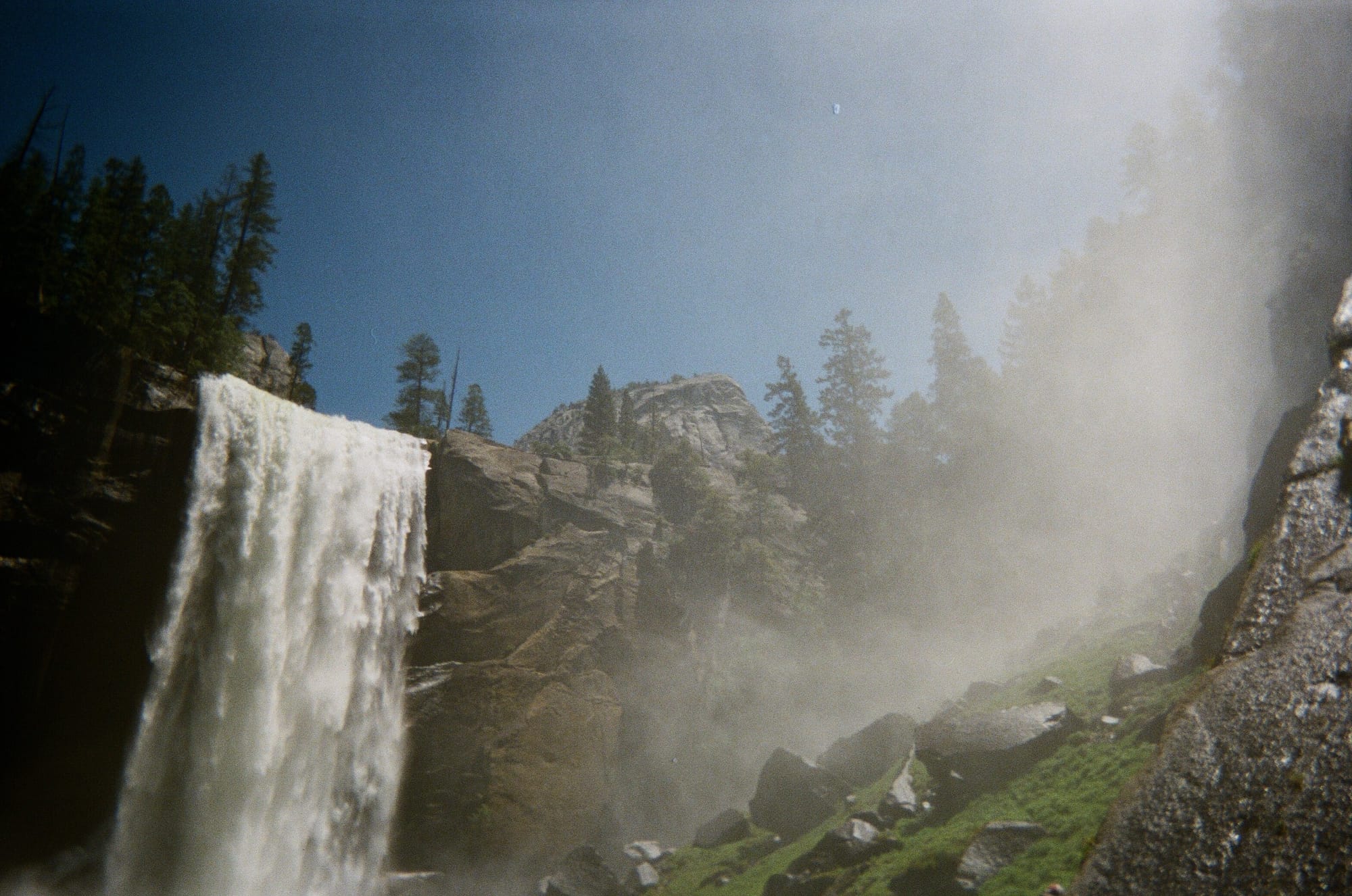
The Mist Trail, early June. Soaked to the bone with a disposable camera and thirty-six frames.
The trail earns its name that time of year. What may be more accurate is the pouring rain trail — though by the time you understand that, you're already soaked. On the way up my friend and I quietly laughed at everyone coming down wearing ponchos. We figured they were overreacting, or just afraid of getting a little wet. By the time we reached the top, freezing, we understood them a little better. The ponchos would have kept us dry, but some things are just better without protection.
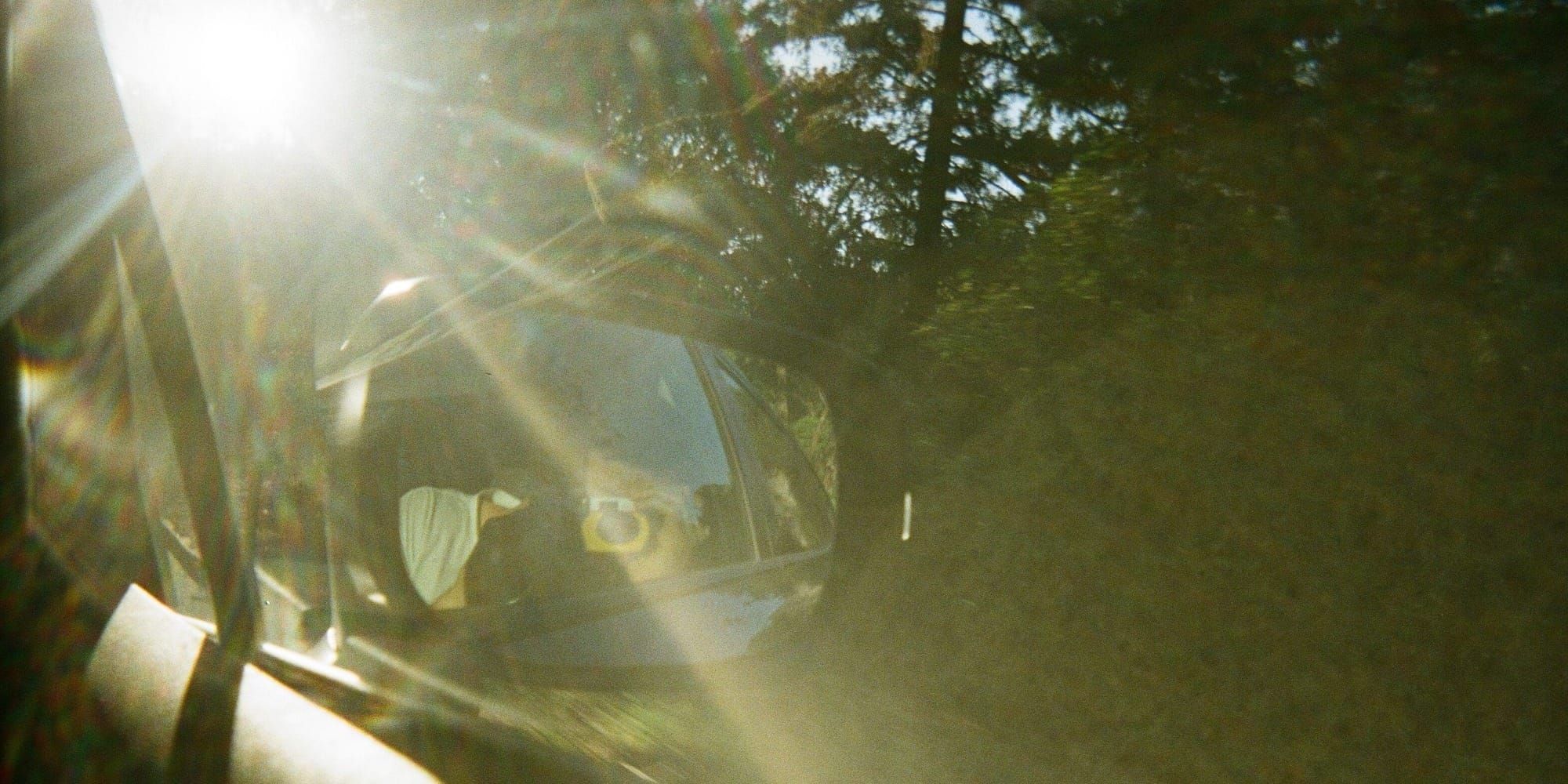
I had ordered the camera a few days before the trip but not as any kind of statement. I figured the beauty of Yosemite was worth capturing. Like a new travel toothbrush, it arrived and went directly into the bag. My friend got carsick on the switchbacks into the park so I let her drive. I sat in the passenger seat, pulled out the camera, pointed it at my own reflection in the window. And pressed the shutter. One frame exposed.
On the trail the camera was a distraction — one more thing to manage on steps that were actively trying to soak and unseat me. And yet, the distraction was also the attention. Without it I would have noticed the beauty the way you typically do: broadly, gratefully, without having to choose. With the camera I had decisions. Which frame and fraction of a second. Which piece of all this was worth another one of my thirty-six. Which moment was I willing to put myself into? The act of choosing slowed everything down. The light falling across the granite slabs. The shape of the water. The rainbows formed in each droplet before it disappeared.
So all of this for me to ask: was the camera what made me start looking again? Or had I decided, somewhere between ordering it online and letting my friend take the wheel, that I was ready to look, and the camera was just the closest tool I knew.
At the top, we found a spot in the sun above the waterfall and laid there like lizards under a heat lamp. I didn’t take that photo.
In Kauai I picked up my phone at a party and began taking photos. Just because the moment felt worth capturing. One photo in particular turned out good, I showed it to the subject and she wanted another. Then another. Each retake became a little more elaborate than the last. I was having fun, until I wasn't.
At some point they wanted a photo of the whole group. People started pulling others in, finding their spot, figuring out where to stand. I was the one left behind the lens. No one did anything wrong. They were excited, having fun, and I was the one who'd taken the first photo so it made sense to keep me there. To most people a photo is just a photo. There was no way to explain what it meant to me, what it felt like it cost, or why the momentum of the room taking that choice away felt like something closer to being locked out than being let in.
After COVID, the camera became something I picked up exclusively on my own terms. Not as a job, not because a room needed someone behind it. Because I saw something worth keeping. That distinction matters more to me than I've ever been able to explain out loud. When I pick up the camera it's an act of admiration. I'm saying — I see you, and I think you're worth seeing. It's one of the more intimate things I know how to do. The person on the other side of it rarely knows what's happening.
How could they?
There are group photos I was never part of because I was the one holding the camera. Most of the time that's a trade I make willingly. Other times I want to be in the frame too. It's a strange position to occupy — the one who sees, who rarely gets seen doing it.
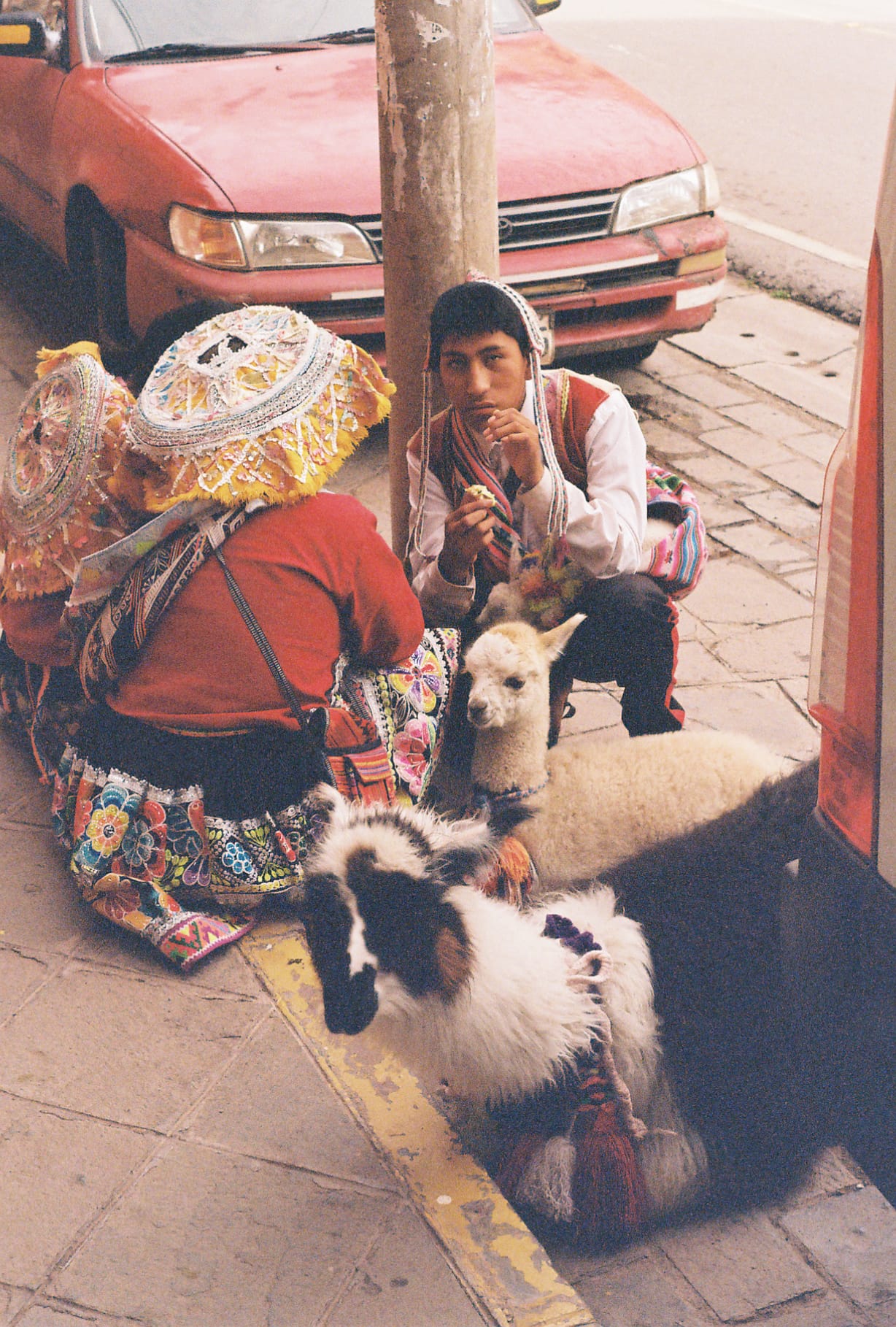
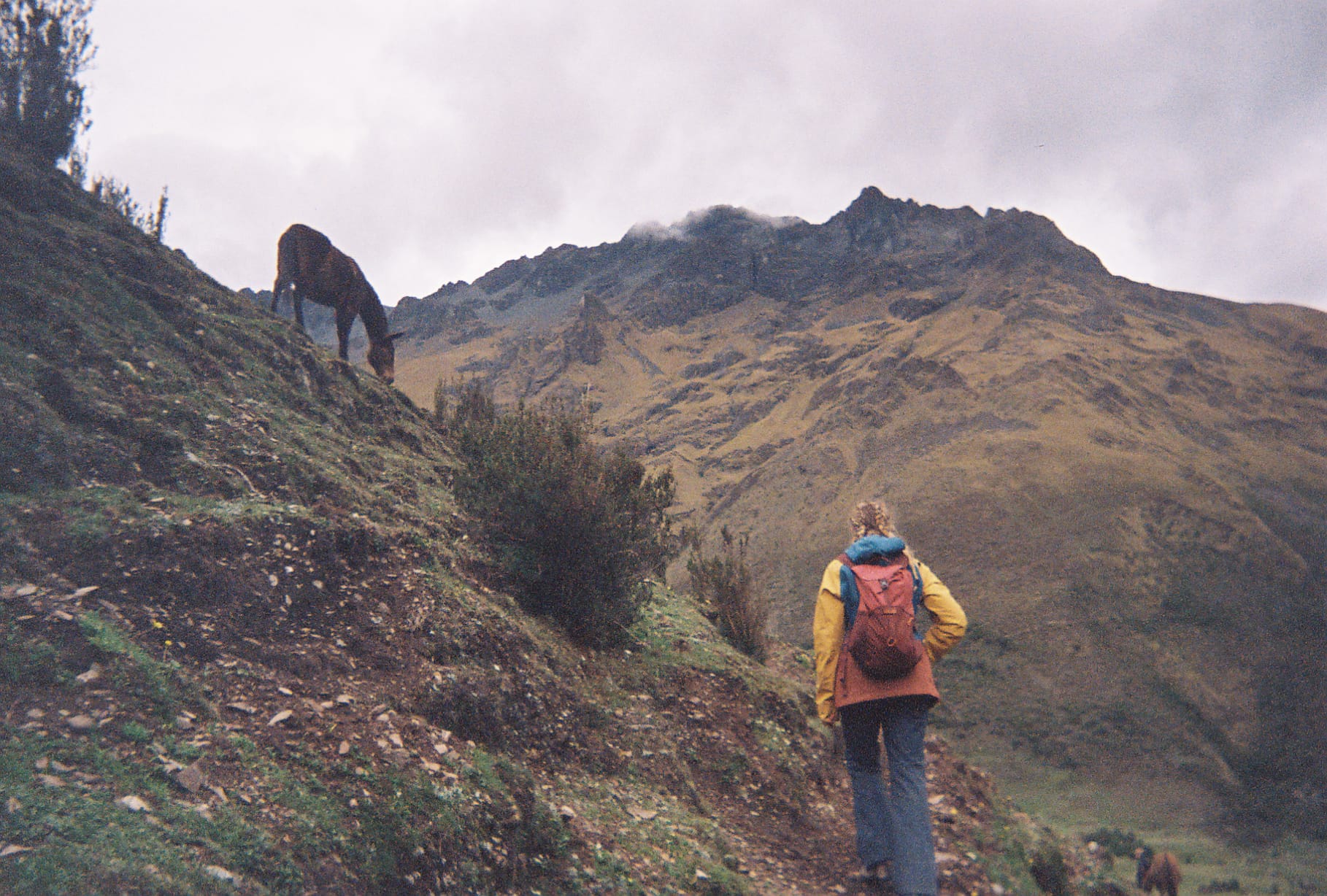
In Peru, I had a film camera with me the whole time. There was a Quechua woman we gave a ride to but what I remember most is the quality of attention I had the entire trip. Something about being so far from everything familiar made looking easier. Less weighted. I was shooting constantly and none of it felt like work. The land, the light, the altitude, the faces of people moving through all of it like it was ordinary.
That trip showed me what the camera does when it's working the way it's supposed to. You're not taking anything. You're just looking, carefully, at what's in front of you.
The camera was never really the point. It was just how I knew I was paying attention. A way of contributing something — to the moment, to the record, to the person I am still becoming.
I'm not done looking.